PECOS Migration to the Cloud: What to Expect
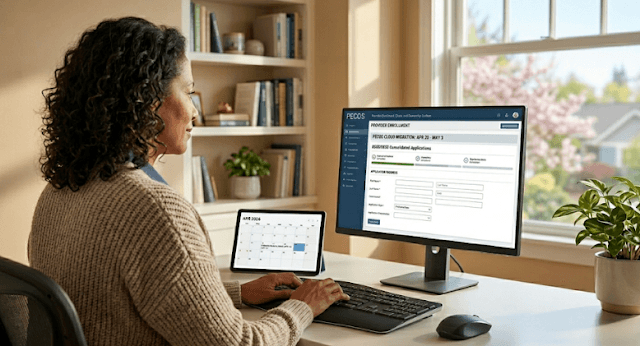
CMS is transitioning the PECOS (Provider Enrollment, Chain, and Ownership System) to a cloud-based infrastructure hosted on Amazon Web Services (AWS).
Key Dates
Migration Window: April 20 – May 3, 2026
Expected Downtime: Limited or no access during this period
System Go-Live: May 4, 2026
During this 14-day window, providers should expect:
Restricted access to PECOS
Delays in processing enrollment applications
Why This Matters for Providers
PECOS is the primary system used to:
Submit Medicare enrollment applications
Update ownership and practice information
Track billing privileges
Any disruption to this system can affect:
Enrollment timelines
Revalidation submissions
Credentialing workflows
Providers with pending submissions during this period risk processing delays or interruptions.
Recommended Strategy Before the Migration
To minimize disruption, providers should take proactive steps.
Best practices include:
Submit all pending enrollment applications before April 17, 2026
Complete any necessary updates to:
Ownership information
Practice locations
Managing employee data
Avoid initiating time-sensitive changes during the migration window
Planning ahead helps ensure your data is processed before system downtime begins.
CMS Form Updates: 855B and 855S Alignment
In addition to the PECOS migration, CMS is implementing a practical improvement to its enrollment forms.
The Change
Historically:
CMS-855B (clinics/group practices)
CMS-855S (DMEPOS suppliers/pharmacies)
Required separate and often redundant data entry processes.
Starting in April 2026:
Key data fields between these forms are being aligned and standardized
Ownership and location reporting will follow consistent logic across both forms
What This Means for Pharmacies & Group Practices
While the forms remain distinct, the alignment provides several benefits:
Reduced risk of data inconsistencies between enrollments
Fewer administrative errors when managing multiple PTANs
Streamlined updates across related entities
For organizations operating both:
A pharmacy (855S)
A clinic or group practice (855B)
This change simplifies how data is maintained across systems.
Why Data Consistency Matters More in 2026
With CMS moving toward automated validation and real-time monitoring, consistent data across enrollment forms is critical.
Mismatches between:
Ownership records
Practice addresses
Organizational structures
Can trigger:
Application delays
Audit flags
Enrollment issues
The updated 855 form structure helps reduce these risks—but only if providers maintain accurate and aligned data across all systems.
What Happens During System Downtime?
While PECOS is temporarily unavailable, providers should understand:
Medicare-related submissions may be paused or delayed
Status updates may not be visible in real time
Communication from CMS may be limited
However, it’s important to note:
Medicaid and commercial credentialing processes continue independently
Other systems (e.g., CAQH, payer portals) remain operational
This means providers can continue managing non-Medicare credentialing activities during the migration.
A Shift from Reactive to Continuous Visibility Management
In 2026, provider visibility is no longer passive.
It requires:
Ongoing monitoring
Regular verification
Active participation in payer systems
The shift is clear:
From “set it and forget it” → continuous verification
From manual updates → automated enforcement
Providers who adapt will maintain:
Network visibility
Referral flow
Revenue stability
Those who do not risk becoming invisible despite being contracted.
Continuous Compliance Beyond PECOS Access
The 2026 regulatory environment requires providers to maintain compliance beyond system availability.
Even during downtime, providers should ensure:
Licenses are current and verifiable
Accreditation requirements are being met
Internal records are accurate and audit-ready
Relying solely on system access is no longer sufficient—internal data management is critical.
A Broader Shift Toward System Modernization
The PECOS migration reflects a larger CMS initiative:
Improve system reliability and scalability
Enable faster processing and real-time validation
Support increased automation in enrollment oversight
For providers, this means:
Greater efficiency long-term
Stricter enforcement of data accuracy
Reduced tolerance for inconsistencies
What Providers Should Do Now
To prepare for these updates, providers should:
Submit critical PECOS updates before April 17
Audit all enrollment data for accuracy and consistency
Ensure alignment between:
855B and 855S records
NPPES (NPI Registry)
Internal documentation
Plan for temporary delays during the migration window
Continue managing non-Medicare credentialing workflows
How PACCS Supports Enrollment During System Changes
System transitions like the PECOS migration can create uncertainty for providers managing multiple enrollment processes.
PACCS (Pharmacy Accreditation Compliance Credentialing Solutions) helps pharmacies and group practices navigate these changes by offering:
Medicare enrollment and revalidation management
Pre-migration submission planning
855B and 855S data alignment and audits
NPI, PECOS, and payer data consistency checks
Ongoing compliance monitoring across all systems
Credentialing support for Medicaid and commercial payers during downtime
By managing both the technical and administrative aspects of enrollment, PACCS helps ensure your billing privileges, compliance status, and workflow continuity remain intact.
To learn more, visit our Services page or contact PACCS to discuss how we can support your organization.
Investigative Dispatch — PACCS Editorial Series
Insights on regulatory developments affecting pharmacy credentialing, Medicare enrollment, and compliance.
Sterling Bly | Investigative Healthcare Blogger